
Echoes of Pagalan
Step beyond the pages of The Pagalan Chronicles. Here we share insights into the lore of Pagalan, behind-the-scenes glimpses of writing, and reflections on the craft of fantasy and science fiction.
Ancient Maps vs. Morganuke’s Age:How Pagalan Changed Through the Ages
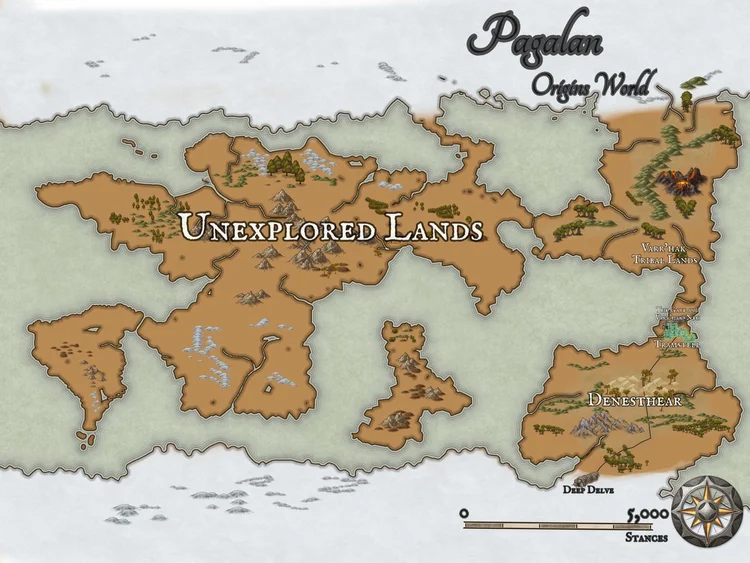
One of the most fascinating mysteries in The Pagalan Chronicles lies not only in the people and battles, but in the maps themselves. When Morganuke uncovered ancient Patronese knowledge, he discovered that the Pagalan of his time was not the same world his ancestors first set foot upon.
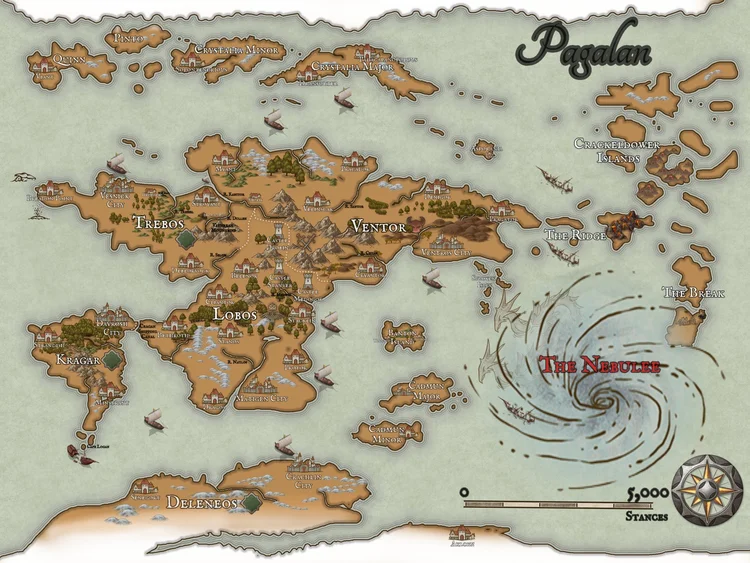
The Ancient Maps of Arrival
When the Patronese first arrived on Pagalan, their maps showed a very different landscape. Vast continents stretched unbroken, coastlines ran smoothly across the seas, and enormous polar ice sheets pressed far into the northern and southern lands. Rivers, mountain ranges, and fertile plains sprawled where now only waves roll.
The Patronese recorded this world with precision, mapping stances of territory and detailing cities that have long since sunk into memory. These ancient charts became not just navigational tools, but a testament to what Pagalan once was before calamity reshaped it.
A World Remade by Catastrophe
By the time of Morganuke Beldere, centuries later, those maps no longer matched reality. Large areas of land had disappeared beneath the sea, swallowed by cataclysmic shifts that tore apart whole regions. Islands stood where continents once stretched. Harbours bustled along jagged coastlines that had once been wide, fertile valleys.
The polar ice sheets had shrunk dramatically, retreating into distant extremes. Their loss exposed new passageways and seas, altering climate and trade, while legends whispered that the melting revealed tunnels and hidden ruins buried since the Patronese first arrival.
Why the Differences Matter
The contrast between these maps is more than geography—it is evidence of the Age of Calamity. Somewhere between the Patronese arrival and Morganuke’s time, Pagalan endured upheavals so immense they reshaped the planet itself. These events, linked to ancient wars and the misuse of portal technology, left scars visible not only in terrain but in memory.
For Morganuke and his allies, the discovery of these differences was more than scholarly curiosity. They pointed to lost homelands, hidden ruins beneath the sea, and the possibility that Denesthear itself lay concealed by the shifting world.
The Legacy of the Maps
Studying these ancient and modern charts side by side reveals Pagalan as a living world of change, mystery, and survival. To hold an old Patronese map is to glimpse a forgotten earth. To walk in Morganuke’s time is to live in the aftermath of a world forever altered.
And within those differences lies the key to understanding not only where the Patronese came from—but where Pagalan’s destiny is still heading.
Pagalan in the Time of Morganuke
When we speak of Pagalan’s long and storied past, few names rise with the same mixture of awe, sorrow, and wonder as Morganuke Beldere. His age was not merely a chapter in history, it was a crossroads where myth and destiny walked hand in hand.
A World at War and in Waiting
Pagalan in Morganuke’s day was a realm divided. Across its seas and fractured lands, the great war with the Cordinens raged, fuelled by treachery and the dark hand of Patronese defectors. Lands like Lobos, Ventor and Trebos became battlegrounds, while distant islands such as Banton and Cadmun stood as bastions of resistance. Every community, from the fishing villages to the fortified castles—felt the weight of conflict and the uncertainty of survival.
Yet beyond the clash of swords and the thunder of cavalry, there pulsed something older: the whisper of Denesthear. Long thought a legend, this hidden Patronese homeland, veiled beneath the Nebulee seas, was said to hold truths from an age before the great calamities reshaped Pagalan. For most, it was a tale for dreamers. For Morganuke, it became a destiny he could neither refuse nor fully grasp.
The Burden of Bloodlines
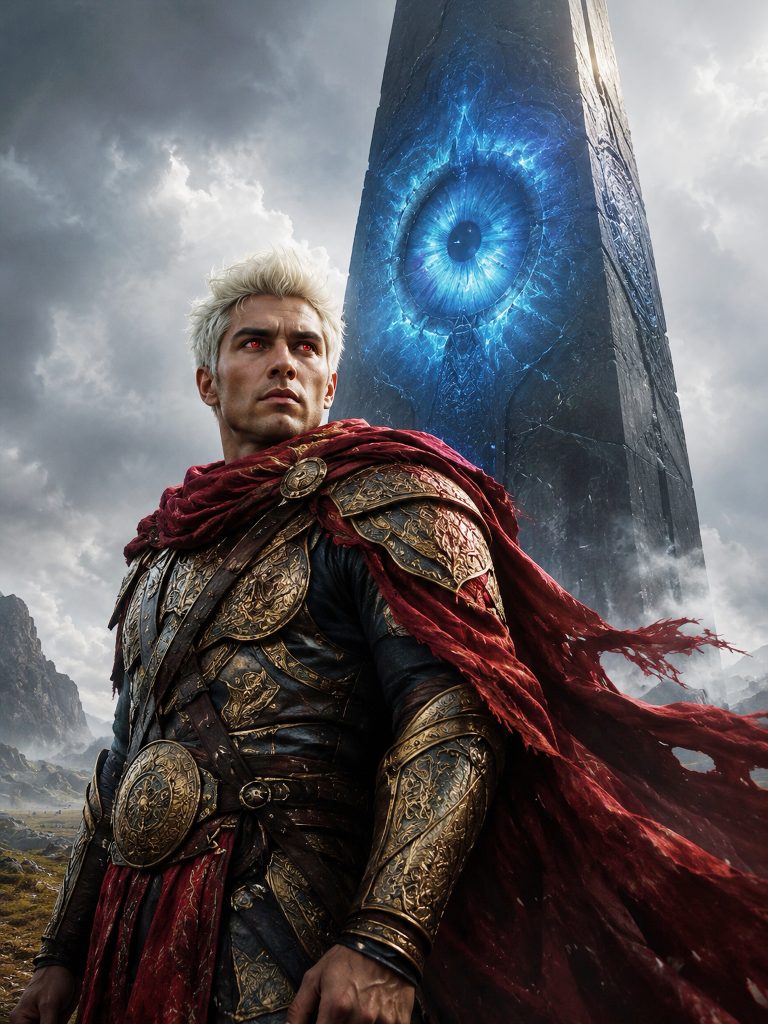
Morganuke was no ordinary island farm boy. Though raised among the simple folk of Banton, he carried within him the blood of House Martilismore, one of Denesthear’s ruling lineages. His silver hair and red eyes marked him as Patronese, but it was his visions, his strange connection to the Nebulee, and the emerald sword that confirmed his place in a greater saga.
In these times, lineage could be a curse as much as a gift. Morganuke longed for peace, for the embrace of Melinor and the laughter of friends. Yet the call of his ancestry demanded more: that he journey across hostile lands, seek lost maps and hidden tunnels, and confront the truth of a civilization splintered between High Orders and rebels.
Allies, Tests, and Betrayals
Pagalan in Morganuke’s age was not a place where any one person could survive alone. He travelled with Fraytar, Melinor, Lengrond, Chanterly, and Calarel, each carrying burdens of their own. He fought beside General Yaloop and Commander Craden Brenadere, men of iron will but conflicting loyalties. And always, he faced mistrust, Epleon councils branding him heretic, Patronese rulers questioning his worth, and enemies eager to exploit his power.
But it was also a time of resilience. Cities rebuilt after devastation. Armies of once-divided nations formed fragile alliances. Families clung to hope even when the future seemed to crumble into mist.
The Legacy of Morganuke’s Time
What, then, was Pagalan in the time of Morganuke? It was a land of thresholds: between old and new, faith and doubt, exile and belonging. It was an age when the fate of the world rested not in armies alone, but in the choices of a young man torn between the quiet life he yearned for and the impossible destiny thrust upon him.
For readers, revisiting Pagalan in these years is to step into a world both perilous and wondrous. A place where ships like the Aurora braved impossible seas, where hidden tunnels led to forgotten knowledge, and where even in the shadow of betrayal, the bonds of love and friendship glimmered like torches against the dark.
Morganuke’s age reminds us that history is never just about battles won or lost—it is also about the people who dared to dream of more, even when the cost of that dream was everything.

Pagalan in the Time of Nigel & Samir: The First Patronese Legacy
Three thousand year before Morganuke was found abandoned as a baby on the Island of Banton, Pagalan stood at a different threshold. It was the age of Nigel Telismore and Samir Camberlain, two names etched into the foundations of Patronese history. Their generation did not inherit stability. Instead, they were the architects of survival, forced to navigate a land where every alliance, every choice, could decide the fate of their people.
The First Arrival
The Patronese did not come to Pagalan quietly. Fleeing the dying world of Yath Varnel, they were led across the impossible reaches of space by Jentry Camberlain, the last Sovereign of their old world and the man who carried responsibility for the survival of their people. Guided through the wormhole known as Nadhrak Sol aboard the ancient Benefactor Obelisks, Jentry brought the Patronese to the frozen shores of Denesthear, where they began the long and difficult task of building a new civilisation upon an unfamiliar world.
Among those early generations were Nigel Telismore and Samir Camberlain, Jentry’s daughter, two figures whose importance would reach far beyond their own age. They became among the earliest representatives of what would eventually be recognised as the High Order Patronese, distinguished by the strength of their resonance and their connection to the ancient technologies that surrounded their people.
Nigel was cautious and deliberate, a steady presence who weighed decisions carefully and sought to preserve unity as the fledgling Patronese civilisation faced both internal pressures and the uncertainties of its new home. Samir possessed a sharper and more determined spirit. Although younger, she was willing to argue passionately for difficult choices when she believed the survival and future strength of the Patronese demanded them.
Together, Nigel and Samir stood near the beginning of a bloodline that would stretch across thousands of years of Pagalan history. Through generations of rulers, scholars and custodians, their lineage would endure through the rise of Denesthear, the divisions between High and Low Order, the catastrophe of the Verentian war and the long years beneath the world. Ultimately, that ancient line would lead to Mandrake Martelismore and, generations later, Morganuke Beldere, whose search for his origins would bring the forgotten legacy of the first Patronese back into the light.
High Order and Low
It was in their time that the first great schism took root: the division of High Order and Low Order. To preserve what they believed was strength, some councillors decreed that bloodlines mattered, that resonance affinity must be guarded. Nigel’s caution lent weight to restraint, yet Samir pushed hardest for restrictions, convinced it was the only way to keep the Patronese strong.
This decree left scars that would never fully heal. The High Order bore the burden of command, while the Low Order carried resentment in silence. Generations later, that divide still lingered like an old wound beneath Tramstell’s shining walls.
Building Tramstell
Despite the hardships of their arrival, the Patronese endured and began to build. At the centre of that effort stood Jentry Camberlain and his wife, Melinder, whose determination helped transform survival into the foundations of a lasting civilisation. Jentry provided the leadership, vision and resolve needed to guide the Patronese through the dangers of their new world, while Melinder became a steadying influence within the growing settlement, helping preserve a sense of family, continuity and purpose as the people adapted to life on Pagalan.
Under their guidance, the first underground shelters of Denesthear expanded into organised settlements, and in time Tramstell began to rise from stone, engineered materials and the recovered technologies brought from Yath Varnel. What had begun as a desperate refuge beneath the frozen surface gradually became the heart of a new Patronese civilisation. Its archive halls grew from simple repositories for memory-stones into vast chambers where the knowledge of their lost world could be preserved, studied and passed to future generations.
Nigel Telismore and Samir Camberlain played a different but increasingly important role within this emerging society. Rather than leading the physical establishment of the settlement, they became closely associated with the development of what would come to be known as the High Order Patronese. Their strong affinity with resonance, and their ability to understand the strange relationship between Patronese bloodlines, ancient technologies and the energies buried beneath Pagalan, made them influential figures in the settlement’s intellectual and political growth.
Why Their Age Still Matters
The time of Jentry, Melinder, Nigel and Samir is more than a prologue to the ages and generation that followed It is the crucible where the Patronese identity was forged. Every choice they made, to divide Orders, to seal the gates, to build Tramstell as both fortress and sanctuary, shaped the path of those who came after.
For readers of The Pagalan Chronicles Origins, their story is a reminder that history is not distant. The debates they began would still resonate in the ages to follow. Their words, preserved in crystalline archives, still whisper through the corridors where new generations seek answers.
Jentry, Melinder, Nigel and Samir did not see themselves as legends. They were Patronese people trying to balance fear, hope, and survival. Yet their legacy endures, not as relics of the past, but as living voices in the stones of Tramstell.
Pagalan in the Time of Jason Telismore: The Awakening of the Gates
Five hundred years after Jentry and Melinder Camberlain , Nigel Telismore and Samir Camberlain first set foot upon Pagalan’s soil, their world had changed beyond recognition. The wars that once carved borders were now only lines in the archives, and the Patronese had turned their energy inward, perfecting their cities and losing sight of the wild horizons that had once defined them.
The Age of Stillness
Tramstell stood unchallenged — a city of white trellisite and light, its towers gleaming against the plains of Denesthear. The resonance grid pulsed beneath its foundations like a sleeping heart. Councillors spoke of order, of hierarchy, of maintaining purity within the High Order, while the Low Order toiled beneath, silent and resentful. To the Council, the age was one of peace. To the world beyond their gates, it was stagnation.
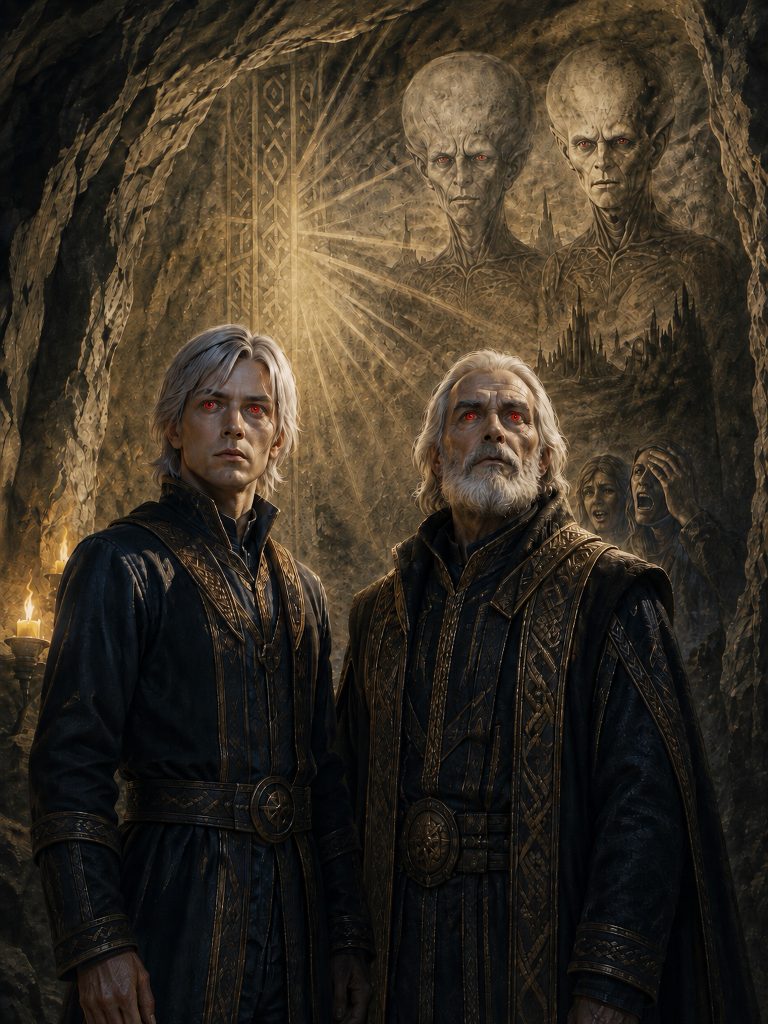
Jason Telismore was born into this stillness, heir to two of the greatest names in Patronese history. Yet he carried neither their ambition nor their pride. Where his father, Councillor Maron Telismore, saw duty and authority, Jason saw confinement — a civilization frozen beneath the weight of its own perfection. He was a scholar of ghosts, drawn not to power but to the voices locked in the archives below Tramstell.
The Weight of Blood
In those archives, Jason uncovered what his ancestors had buried. Records of the first arrivals, of the schism between High and Low Orders, and of the expeditions that had vanished through the gates centuries before. The Council called them lost; Jason called them silenced. The resonance that had once connected the Patronese to their purpose had faded into dogma, its living pulse reduced to myth.
But when Jason touched the old stones — those that still whispered with the energy of the gates — something stirred. The resonance spoke again, faint but undeniable, calling his name across the centuries. “Blood remembers,” it said, and in that moment, Jason realized the past had never been sealed. It had only been waiting.
The Council Divided
The High Council of Tramstell debated endlessly — the Low Orders’ unrest, the growing tremors beneath the city, the rumours of strange lights beyond Denesthear’s border. Some, like Councillor Thyra Camberlain-Dorneth, urged compassion and unity. Others, such as Daelith Corranor and Seliora Veynn, argued for control and purity. Jason’s father stood among them, the unyielding voice of order.
From his seat in the gallery, Jason watched them fracture, their pride blinding them to the truth. The gates beneath Tramstell — once sealed for protection — were stirring again. The resonance was reawakening, and with it, the buried memories of those who had dared to cross centuries before.
The Unfinished Legacy
Jason’s story is not one of conquest, but of return. He sought not to open the gates, but to understand them — to uncover what his ancestors feared. In doing so, he became the bridge between eras: the boy who listened when others spoke, the heir who carried a legacy older than his name.
Pagalan in Jason’s time stood on the edge of rediscovery. To most, it was an age of serenity. To Jason, it was the calm before revelation — the quiet breath before the world remembered its own heartbeat.
The resonance was awake once more.
And through Jason Telismore, it began to speak again.
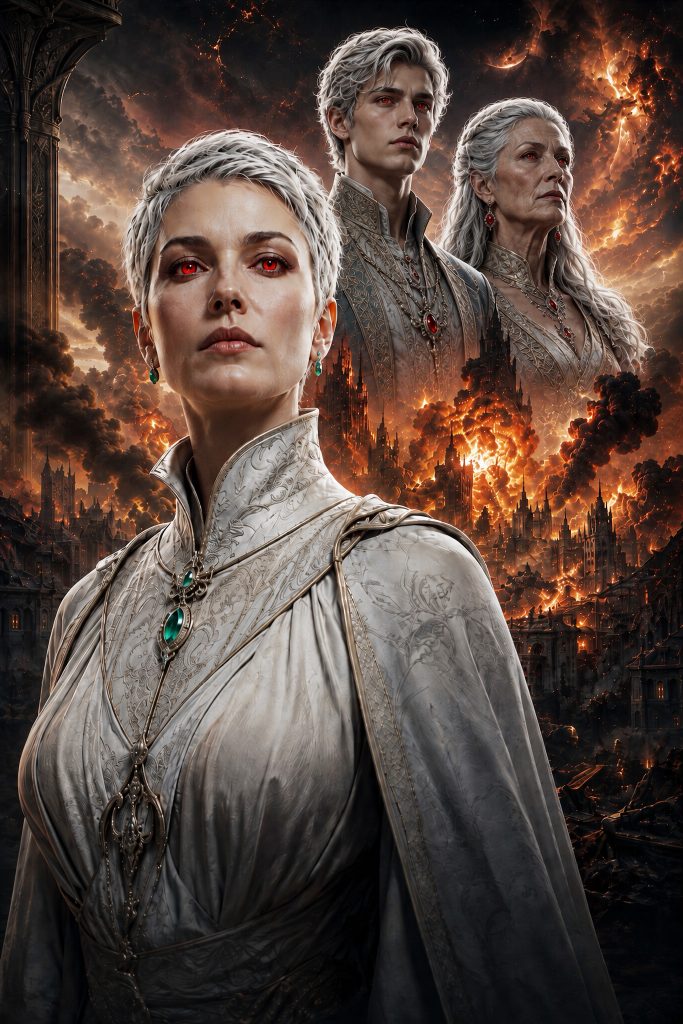
Pagalan in the Time of Olivier Martelismore and Tharen Sol Martelismore
The Last Age Before the Silence
Four centuries after Jason Telismore awakened the resonance beneath Tramstell, Pagalan entered its final golden age, a light so bright it could not see its own decay. The Patronese believed their perfection eternal. The towers of Denesthear gleamed white and flawless, their streets paved with living light, their skies ruled by order and symmetry. Yet within those radiant veins, something darker had begun to stir.
This was the world of Olivier Telismore, last heir of the ancient bloodline, and of Tharen Sol Martelismore, the soldier-scholar who would carry the warning no one wished to hear.
The Illusion of Stability
In Olivier’s time, the Patronese were divided not by enemies but by comfort. The High Order ruled from crystal towers, their lives measured in protocol and precision. The Low Orders worked the conduits and the power veins, their murmurs of unrest dismissed as the noise of lesser minds. Between them lay the pulse of the world itself, the resonance, a power so ancient that few remembered it was alive.
The Council spoke of preservation, not progress. For generations they had forbidden the study of resonance, fearing what their ancestors once wielded. Yet as Olivier soon discovered, the silence beneath Tramstell was not rest. It was waiting.
The Return of the North
Olivier’s journey beyond the barrier revealed a danger far greater than anything the Council had imagined. In the frozen northern wastes, she discovered evidence that the tribal peoples were no longer developing along the natural path history had once recorded. Strange forges burned blue beneath the ice, unfamiliar lights crossed the sky where no Patronese craft flew, and harmonic pulses travelled through the ground with a resonance that could be felt deep within the body. The tribes were not advancing alone. They were being guided by forces that threatened eventually to bring catastrophe to Denesthear.
Confronted with the prospect of her people’s destruction, Olivier made the most dangerous decision of her life. Through her connection with the resonance and the ancient forces surrounding the gates, she altered the course of events, reshaping the timeline before the tribal threat could reach its devastating conclusion. The change worked. The immediate danger vanished, the chain of events leading towards Denesthear’s destruction was broken, and for a time it seemed that Olivier had succeeded in saving the Patronese civilisation.
But history had not been defeated. It had only changed its path.
As the revised timeline unfolded, Olivier discovered that the tribes she had known were no longer the force destined to challenge Denesthear. In their place had risen the Verentians, a far more advanced civilisation whose technological development and growing power presented an even greater long-term threat. The people Olivier had once feared had effectively been replaced by something stronger, more organised and ultimately more dangerous.
Olivier had prevented the immediate fall of Denesthear, but she had not removed the forces driving history towards catastrophe. She had merely postponed their consequences. The destruction that might have come in her own lifetime was pushed forward into the lives of later generations, where the growing conflict between the Patronese and the Verentians would eventually erupt with devastating consequences for Pagalan.
Her victory, therefore, was both extraordinary and tragic. Olivier had bought Denesthear time, perhaps centuries of it, but the future she created still carried the seeds of the disaster she had tried so desperately to prevent.
The Fall of Denesthear
By the generations of Siren Valien Martelismore and her son, Tharen Sol Martelismore, the world Olivier had fought so desperately to save had changed beyond anything she could have foreseen. Her alteration of the timeline had prevented the immediate destruction of Denesthear, but it had not removed the forces gathering beyond Patronese lands. Instead, the primitive tribes that had once threatened the future had been replaced within the new course of history by the far more advanced Verentian civilisation.
For a time, the Patronese and Verentians existed alongside one another, sharing access to ancient technologies and benefiting from knowledge obtained through the great portal. Yet as the Verentian population and ambitions grew, they began expanding eastwards into the lands of Asporta, displacing the tribal peoples who lived there. The Patronese, still determined to avoid interfering with the natural development of other civilisations, demanded that the expansion stop. When the Verentians refused, access to the portal became both a weapon of diplomacy and the spark that finally ignited war.
Siren’s generation witnessed the growing shadow of that confrontation, while Tharen Sol Martelismore inherited a world in which diplomacy was giving way to open conflict. The two great civilisations possessed technologies of almost unimaginable power, much of it drawn from knowledge and weapons obtained beyond the portal. Once restraint failed, the struggle rapidly became something neither side could fully control.
The war that followed devastated Pagalan.
The Patronese ultimately emerged victorious. Their subterranean cities, defensive barriers and superior preparations allowed them to survive, while the Verentian civilisation was effectively destroyed. Yet victory brought little cause for celebration. The weapons unleashed during the conflict scarred continents, poisoned oceans and filled the atmosphere with ash. Temperatures collapsed as sunlight struggled to penetrate the darkened skies, and the surface of Pagalan began to freeze.
The Patronese had defeated their enemy, but in doing so they had helped make much of their own world impossible to inhabit.
Under the Martelismore rulers of that age, the surviving population withdrew into the vast underground cities beneath Denesthear. Tramstell, Sostrem, Captcore and the other subterranean settlements, once built as protected centres of research and resonance technology, became refuges for an entire civilisation. Tharen Sol Martelismore would become one of the central figures in stabilising Patronese society after that withdrawal, helping his people adjust to a future in which the open skies of Pagalan existed only in memory.
Olivier had therefore succeeded, but only in part. She had prevented catastrophe from consuming Denesthear in her own age and had given her descendants generations they would otherwise never have known. Yet history had found another road toward destruction. The Verentians had replaced the threat she had erased, and the disaster she postponed eventually arrived in the age of her descendants.
The Patronese survived. They were even the victors.
But their victory drove them beneath the world for the next two thousand years.
The Legacy of Olivier and Tharen
The legacy of Olivier Martelismore and Tharen Sol Martelismore was ultimately one of survival bought at an extraordinary price.
Olivier’s greatest achievement had been to alter the course of history before the first threat to Denesthear could bring about its destruction. By changing the timeline, she prevented catastrophe in her own age and gave the Patronese generations of life they might otherwise never have known. Yet the danger she removed did not disappear completely. History reshaped itself, and in the revised timeline the primitive tribes were replaced by the far more advanced Verentians, whose growing power would eventually bring the Patronese to war.
By the time of Tharen Sol Martelismore and the generations surrounding him, that postponed reckoning had arrived. The conflict between the Patronese and the Verentians escalated into a devastating war fought with technologies of almost unimaginable power. Although the Patronese ultimately emerged victorious and the Verentian civilisation was destroyed, their triumph came at a terrible cost. Vast areas of Pagalan were ruined, the atmosphere was choked with the consequences of the weapons that had been unleashed, and the surface world began its descent into a prolonged period of darkness, cold and devastation.
The Patronese had won the war, but they could no longer safely inhabit the world they had fought to defend.
Their survival depended upon retreat. The great underground cities of Denesthear, including Tramstell and the other subterranean settlements established over earlier generations, became refuges for the remnants of Patronese civilisation. What had once been places of research, industry and protection were transformed into the foundations of an entirely new way of life beneath the surface of Pagalan.
In this, the legacies of Olivier and Tharen became inseparably linked. Olivier had given the Patronese time. Tharen’s generation ensured that, when that borrowed time finally ran out, the Patronese survived what followed. Neither had defeated history completely, but both had shaped the means by which their people endured it.
The consequences of their choices would echo for almost two thousand years. The Patronese remained hidden beneath Pagalan while the devastated surface slowly recovered, their history passing into legend and their connection with the world above becoming increasingly distant. Yet the ancient bloodline endured, carrying with it fragments of memory, resonance and responsibility through generation after generation.
Long after Olivier and Tharen were gone, that legacy would eventually reach Mandrake Martelismore, the king who dared to question whether his people should remain beneath the world forever, and ultimately Morganuke Beldere, whose search for his own origins would reconnect the hidden Patronese civilisation with the wider world of Pagalan.
Olivier had changed history.
Tharen’s generation had survived its consequences.
And together, their legacy ensured that the Patronese story did not end with the Verentian war.
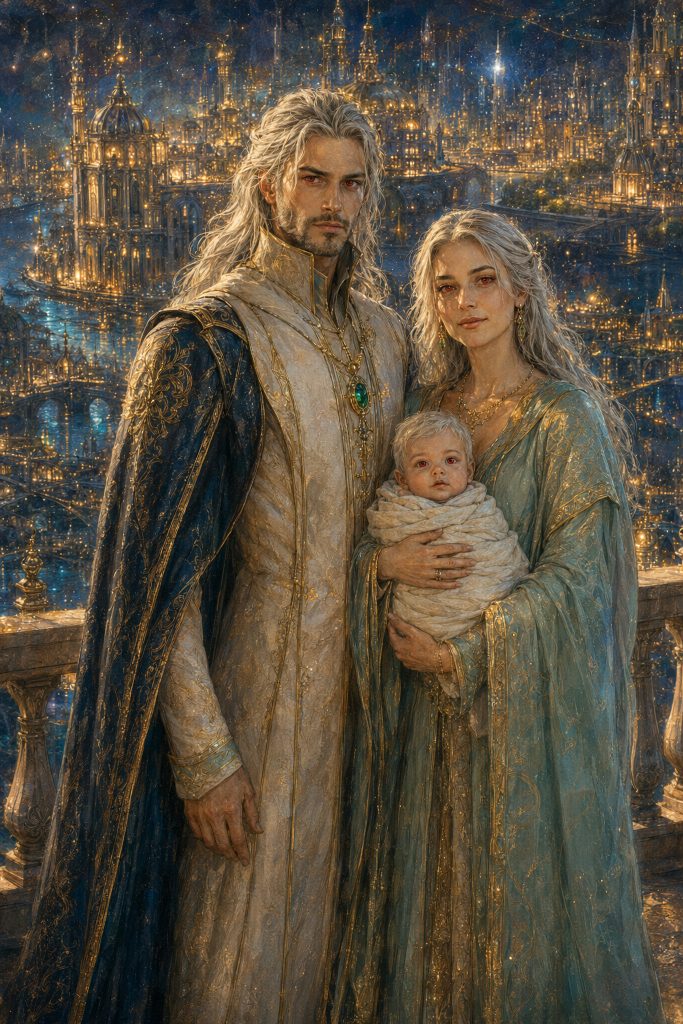
Pagalan in the Time of Mandrake Martelismore
Nearly two thousand years had passed since the devastating Verentian War scarred Pagalan and forced the victorious Patronese to abandon the surface world they had fought so desperately to protect. Beneath the frozen lands of Denesthear, their civilisation endured within the vast underground cities of Tramstell, Sostrem, Captcore, Cradlmont and Dremont, sustained by ancient technologies, resonance systems and the mysterious chronometric automatons inherited from the Benefactors. Generations were born and died without ever feeling sunlight upon their faces, until life beneath the world became more than a means of survival. It became the only existence most Patronese could imagine.
The Continued Friction Between Low and High Orders
By the time of Mandrake Martelismore I, the division between the High and Low Orders had existed for almost two thousand years. What had begun in the earliest generations as a distinction based largely upon strength of resonance and affinity with ancient Patronese technologies had hardened into a deeply entrenched social hierarchy.
The High Order Patronese occupied most positions of political authority, scholarship and administration. They dominated the Council, controlled access to much of the ancient knowledge preserved beneath Tramstell, and regarded themselves as the natural custodians of Patronese civilisation. Many believed that their stronger connection with resonance justified the privileges their families had inherited across generations.
The Low Orders, meanwhile, had become the foundation upon which the subterranean cities depended. They maintained the energy conduits, resonance systems, machinery and deeper infrastructure that allowed millions of Patronese to survive beneath Pagalan. Yet despite their importance, they possessed considerably less influence over the society they sustained. Their lives were increasingly governed by production requirements, restricted opportunities and decisions made by High Order administrators far removed from the lower levels.
Two thousand years beneath the surface had not healed that divide. It had deepened it.
During Mandrake’s reign, tensions were becoming increasingly difficult to ignore. Some Low Order communities questioned why distinctions created thousands of years earlier should continue to determine a person’s opportunities, status and place within society. Workers in the lower levels began resisting increasingly rigid controls, while dissatisfaction spread through districts upon which Tramstell’s survival depended. Strikes and unrest threatened systems the High Council had long assumed would continue operating without question.
Among the most influential defenders of the established order was Counsellor Yamanie Vorchester. She believed that the underground civilisation had survived because it was carefully regulated and that strict organisation of the Low Order workforce remained essential. Her reforms increased efficiency throughout the lower districts, but they also strengthened the administrative control exercised over those who lived and worked there. To Yamanie, hierarchy provided stability. To many among the Low Orders, it increasingly represented generations of inequality.
Gideon Soulestor occupied a less predictable position. At times he supported Yamanie’s calls for firm control and greater efficiency, yet on other occasions he resisted attempts to exclude Low Order citizens from education and advancement. His position reflected a growing difficulty facing the entire Patronese civilisation: the old system could no longer simply be divided between those who defended it and those who opposed it. Even within the High Order, questions were emerging about whether traditions created for survival had become barriers to the future.
Mandrake increasingly recognised the danger. The Low Orders were not an enemy population. They were Patronese, descendants of the same people who had fled Yath Varnel and survived the Verentian catastrophe. Yet centuries of separation had allowed inequality to become accepted as tradition.
His desire to return eventually to the surface of Pagalan therefore became connected with something larger than exploration. A return to the world above offered the possibility of new settlements, new occupations and freedoms that could challenge the rigid social structure of the underground cities. It was precisely this possibility that frightened some members of the High Order establishment. Above ground, the carefully regulated hierarchy that had existed beneath Denesthear for two millennia would become far more difficult to preserve.
For Mandrake, the question was becoming unavoidable. The Patronese had survived the Verentian War, the nuclear winter and two thousand years beneath the earth, yet they now faced a danger created by their own society. Unless High and Low Orders could find a way to live as parts of the same civilisation rather than separate classes within it, the greatest threat to the Patronese future might no longer come from beyond Denesthear.
It might come from within.
Mandrake Final Desperate Act
The final days of Mandrake Martelismore’s reign brought him face to face with a danger unlike anything the Patronese had encountered since the Verentian War. The ancient disturbance connected with the roaming gate had become aware of the Martelismore bloodline, and its attention settled upon Mandrake and Tabatha’s newborn son. The child was no longer merely the heir to the Patronese throne. To the intelligence reaching through the fracture, his blood and resonance marked him as a future key, something through which the ancient pathways between worlds might once again be opened.
The threat finally reached into the royal nursery itself. As the strange presence attempted to take hold of the child through his name and bloodline, Tabatha placed herself between it and her son. She became the barrier the invading force could not immediately cross, sacrificing herself so that her child might live. For Mandrake, the loss was devastating, but it also revealed a terrible truth. As long as his son remained within Denesthear, surrounded by the resonance systems, gates and records that recognised the Martelismore line, the child could never truly be safe.
Mandrake was therefore forced to make the most painful decision of his life. He chose to erase his son from the world that had given him his name.
The infant Mandrake Martelismore was placed aboard a concealed Patronese life pod and sent far beyond Denesthear to Banton Island, where the ancient systems would struggle to follow him. Hidden with the child was the emerald-studded sword containing the green gem, his inheritance preserved for a future in which he might finally be old enough to understand it. Mandrake knew his son could no longer safely carry the name by which the hostile intelligence had recognised him. He would have to grow beyond Denesthear, without knowledge of his royal birth, his father or the destiny buried within his blood.
Sending the child away, however, was not enough.
The roaming fracture still possessed a path to him. Through Mandrake himself, the royal bloodline, the gates, the green gem and the grief connecting father to son, the incursion could still trace the child it had identified. Mandrake realised that if his son was ever to have a chance of living freely, that chain had to be broken. The threat needed something else to follow.
So Mandrake made himself its target.
Using a harmonic imprint copied from the sword, Mandrake awakened one of the ancient Benefactor obelisks while Borliac Moorlike and hundreds of volunteers prepared a second. Their intention was desperate and uncertain: enter the roaming temporal fracture, draw the hostile presence away from the escaping child and sever the path by which it had learned to recognise the Martelismore line. None of those who entered the obelisks could know where they would emerge, when they might emerge, or whether they would ever return to a world that remembered them.
As the obelisks rose from the storm-torn sea and turned towards the impossible wound in the sky, Mandrake carried no crown. Against his heart he kept only the blue blanket that had once wrapped his son, holding the last physical memory of Tabatha and the child he had been forced to abandon. When the intelligence within the fracture tempted him with an image of Tabatha alive again, holding their son safely in the nursery, Mandrake refused. He understood that accepting the illusion would only restore the chain he was trying to destroy.
His wife’s final wish had been simple.
Let him live.
Mandrake chose to honour it.
The first obelisk entered the fracture with Mandrake aboard, followed by Borliac’s second vessel. As the darkness reached for the king rather than the child escaping towards Banton, Mandrake used the ancient machine and the remaining connection of his bloodline to attack the recognition path itself, attempting to sever the trail through which the incursion had learned where to look.
Mandrake’s final desperate act was therefore not merely the sacrifice of a king. It was the sacrifice of a father who willingly surrendered his crown, his home, his identity and perhaps his own place in history so that his son could disappear from it.
The plan succeeded in the one way that mattered most. The child reached Banton Island, where Fraytar DeLance discovered the disguised life pod among the storm-battered rocks. The infant was eventually taken in by Stovin and Plarem Beldere, who knew nothing of the Martelismore bloodline and raised him simply as their son. Even his royal name disappeared. In its place came another name, one that carried no resonance record and drew no answering voice from the ancient gates.
Morganuke Beldere.
In trying to save the Patronese, Mandrake had once hoped to lead his people back into the sunlight. In the end, his greatest achievement was far more personal. He ensured that his child would one day stand beneath that sky, even though Mandrake himself could not be there to see it.